Cutting Out the Clinical Look in Universal Design
Our home has become our sanctuary, not just a shelter to protect us from the elements. It is a place that can nurture, heal, support and inspire occupants. With thoughtful universal design features and material selections, a home can do all of that and more – through all stages of life.
As the adoption of biophilic design has shown, our physical and mental well-being are directly impacted by our physical environment(s). To that end, it is important for designers to create remodel and new construction project designs that deliver intrinsic value via UD – regardless of the age and/or health of their clients. You never know when you are going to need a grab bar, zero-threshold shower or bidet-style toilet … no one plans to have an accident or serious medical issue.
When one experiences a home where UD principals have been incorporated, they are likely to feel a sense of peace and belonging. Occupants don’t instinctively know that the doorways are 36 inches wide, but they do sense that the home is easy to use and navigate, which subtly imbues a welcoming feeling. Including human-centric lighting, accessible storage in kitchens and/or bathrooms with intuitive easy of use and attractive finishes is at the heart of good design, not just UD. When done properly, the design features and materials are an integral part of the whole, blending in seamlessly, providing safety and support hidden in plain sight.
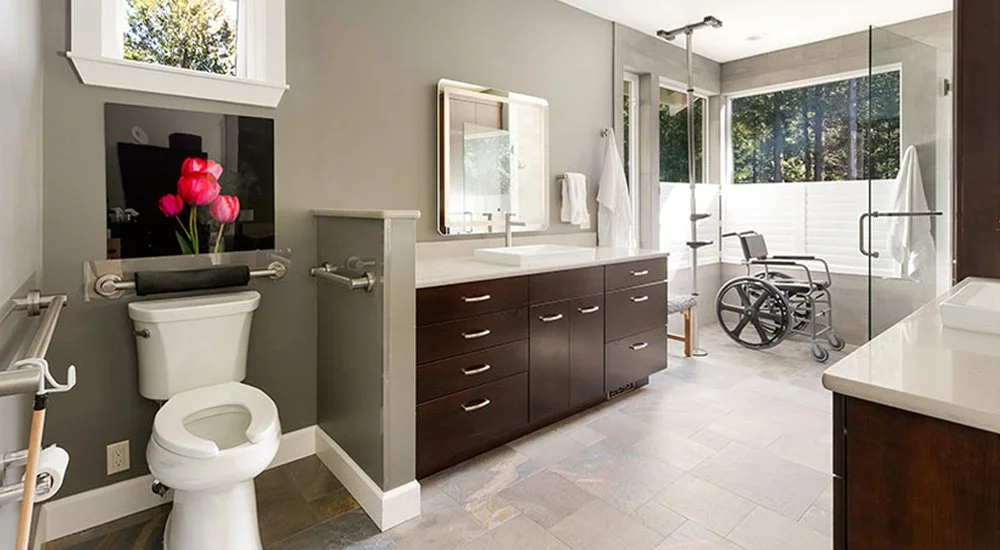
Above below: In this accessible and attractive bathroom, Molly Erin McCabe incorporated Dura Supreme vanities (one with a roll-up Decolav sink), single-lever Graff faucets and decorative grab bars from HealthCraft and Moen. Photo credit: Tammy Dwight Photography